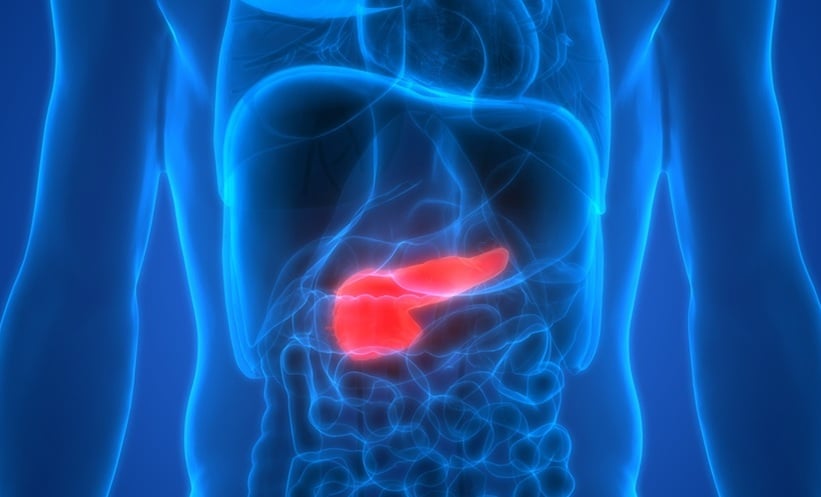
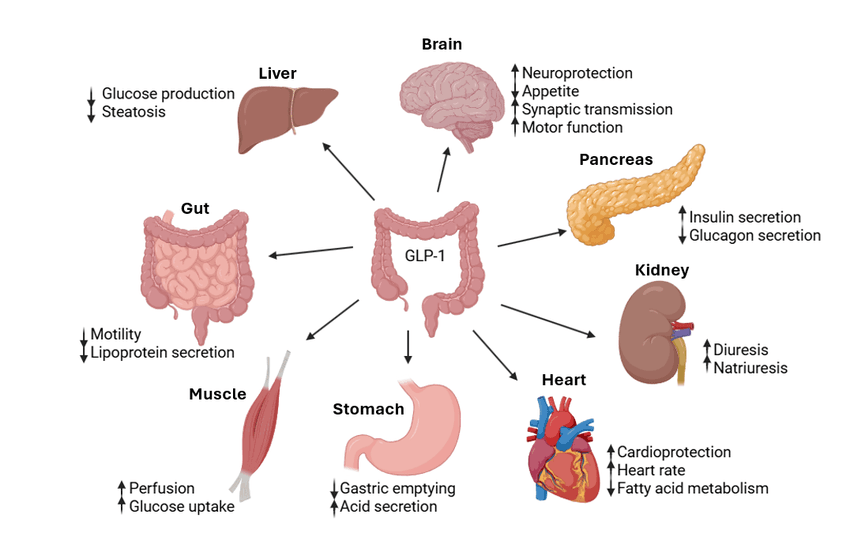
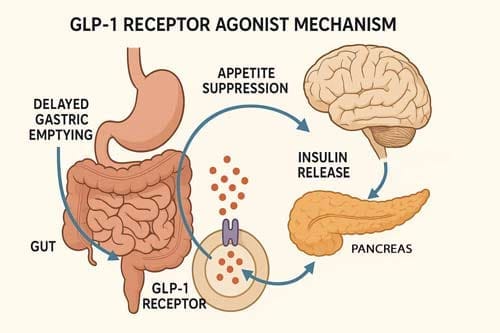
.41,42 GLP-1R , .43,44 GLP-1R CNS , , , .45,46 GLP-1RAs GLP-1RAs result from intricate structural modifications to GLP-1, enabling them to not only replicate the pharmacological functions of GLP-1 but also impede its hydrolysis by DPP-4, thereby extending the drugs half-life.47,48 These synthetic protein preparations exhibit partial or complete amino acid sequence homology with endogenous GLP-1, rendering them resistant to degradation which resulting in a prolonged half-life and heightened biological activity.47,48 By emulating the biological activity of natural GLP-1, GLP-1RAs effectively fulfill the role of GLP-1, effectively lowering blood glucose levels without increasing the risk of hypoglycemia and demonstrating favorable safety profiles.49 GLP-1RAs represent a pharmacotherapeutic category of injectable hypoglycemic agents that are sanctioned as adjunctive therapies to diet and exercise for the management of type 2 diabetes mellitus (T2DM) in adult patients and potentially hold promise in addressing other medical conditions.7,50,51 As researchers dive deeper into their multifaceted properties, these medications exhibit the potential to offer therapeutic benefits across a spectrum of diseases in human populations

Raw fluorescent intensities were extracted using Fiji to obtain average intensity traces and AUCs calculated using GraphPad Prism 10.2.1
The semaglutide versus tirzepatide comparison breaks down exactly how these two medications differ in terms of mechanism, efficacy, and side effect profiles
It's the first time in a decade that health experts at the American Heart Association and the American Stroke Association have issued significant updates to their guidelines